
Sinusitis and Endoscopic Sinus Surgery — Ankara
Most sinusitis resolves with medication. When symptoms last for months, recur several times a year, or fail to respond, the sinus openings are assessed with endoscopy and CT. Surgery aims less at cleaning the sinuses than at letting them ventilate.
What sinusitis is
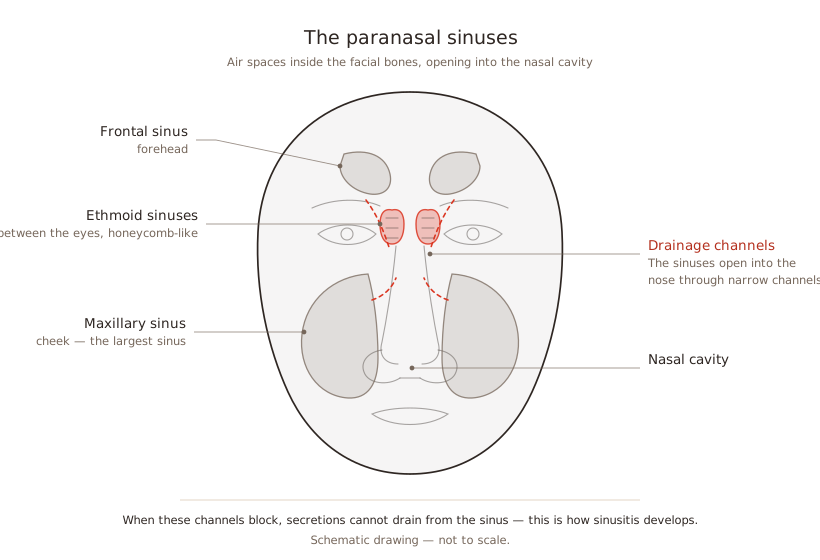
The sinuses are air spaces within the facial bones. Each opens into the nasal cavity through a small ostium and drains its secretions through it. If that opening is blocked, secretions accumulate, become inflamed, and sinusitis follows.
Acute sinusitis resolves within a few weeks, usually with medication. When symptoms last longer than twelve weeks the picture is chronic. In the chronic form the question is no longer which antibiotic, but why these openings keep blocking.
Symptoms
- Pressure and fullness in the face, forehead or around the eyes
- Nasal obstruction and postnasal drip
- Reduced sense of smell
- Headache that worsens on bending forward
- Cough, particularly at night
- Frequently recurring upper respiratory infections
- Bad breath
How it is assessed
The inside of the nose is examined with an endoscope, which shows the sinus openings, the postnasal space and any polyps that a standard examination cannot reveal. A CT scan of the paranasal sinuses is requested where needed; it shows both which sinuses are involved and where the anatomy is narrow.
Allergy frequently accompanies the picture. Where there is an allergic background, surgery alone will not be enough and allergy treatment must continue after the operation. Saying this before surgery sets the expectation correctly afterwards.
When surgery is considered
Surgery is not the first option. Medical treatment at an adequate dose and duration is tried first: nasal sprays, antibiotics where indicated, and allergy treatment.
Endoscopic sinus surgery is considered if symptoms persist despite appropriate treatment, if attacks recur several times a year, or if CT shows marked obstruction or polyps.
How it is performed
The procedure is done entirely through the nostrils with an endoscope. There is no incision on the face. The aim is to widen the sinus openings and correct the structures causing obstruction, while preserving as much sinus mucosa as possible.
If a deviated septum or enlarged turbinates contribute to the picture, they can be corrected in the same session. Polyps are removed where present.
Nasal care after surgery is an important part of the result. Saline irrigation and endoscopic cleaning at follow-up prevent the openings from closing again.
Recovery
- First 48 hours The lining is swollen and there may be blood-stained discharge. Do not blow your nose. Keep the head elevated.
- Week 1 Crusting phase. Regular saline irrigation begins. The first review takes place now.
- Weeks 2 to 4 Endoscopic cleaning at review. Breathing and the sense of pressure improve noticeably.
- Months 2 to 3 Mucosal healing completes. Improvement in the sense of smell becomes clear.
- Afterwards Where there is an allergic background, treatment continues. Regular review reduces the chance of recurrence.
These are average times; recovery varies from person to person.
Written and medically reviewed by
Ear, Nose and Throat Surgeon · Last reviewed:
Frequently asked questions
Will sinus surgery leave a scar on my face?
No. Endoscopic sinus surgery is performed entirely through the nostrils; there is no incision on the face.
Will surgery end my sinusitis for good?
Surgery restores ventilation and in most patients reduces symptoms considerably. If there is an underlying tendency to allergy or polyps, the picture can recur, which is why treatment and follow-up after surgery matter.
Would antibiotics not be enough?
In acute sinusitis they usually are. In the chronic form the problem is obstruction rather than infection; antibiotics give temporary relief but do not remove the cause.
Will my sense of smell come back?
If the loss is due to swelling and polyps, improvement is expected after surgery. Where a long-standing loss has affected the olfactory nerve, recovery may be limited.
Will packing be used?
Not as routinely as before. Where needed, dissolvable materials are preferred. This is discussed beforehand according to the extent of your operation.
Book a consultation
Let us establish the source of your complaint together, through examination and endoscopic assessment.